
Marshall Bribery Lawyer
Experienced Bribery Attorney in Marshall, NC
If you are facing a bribery investigation or charge in Marshall, North Carolina, the situation can quickly become overwhelming. Allegations involving public officials, government decisions, money, or other benefits can carry serious criminal consequences. A skilled Marshall bribery lawyer can examine the circumstances surrounding the allegation, identify the law that applies, and help you understand the defense options available in Madison County and throughout North Carolina.
Bribery cases are handled as part of our dedicated Marshall criminal defense practice at W. James Payne Law Firm.
Why Trust W. James Payne Law Firm
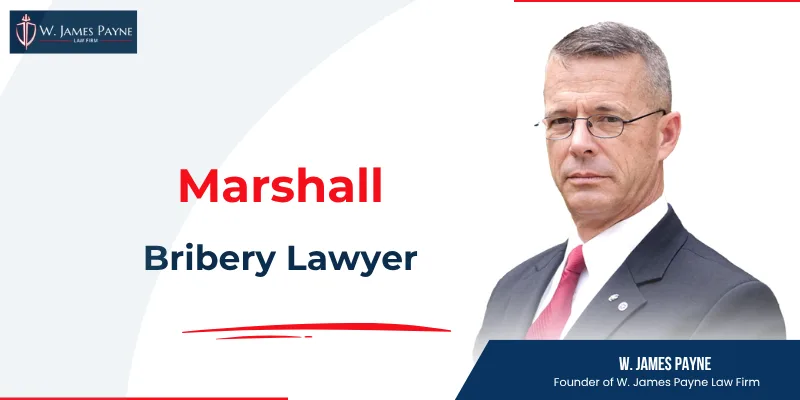
Choosing criminal defense counsel is an important decision when an allegation could affect your freedom, reputation, career, or professional standing. The W. James Payne Law Firm focuses its practice on criminal defense and military justice matters. W. James Payne has practiced law since 1984 and has concentrated his legal career on criminal defense and military justice.
The firm’s published biography also notes that Payne is a North Carolina native, earned his undergraduate and law degrees from Campbell University, and holds licenses to practice before North Carolina’s state and federal courts, including the U.S. District Courts for the Eastern, Middle, and Western Districts of North Carolina and the Fourth Circuit.
His background includes three decades of service in the United States Marine Corps Reserve, including five years as a Judge, before retiring as a Colonel. The firm describes his military experience as having reinforced a strong commitment to professional responsibility and attention to detail.
For clients dealing with complicated allegations, that background can be particularly relevant when a case involves extensive documentation, multiple witnesses, financial records, government activity, or questions concerning an individual’s official authority.
What Constitutes Bribery in North Carolina?
North Carolina’s bribery laws address several different forms of conduct. Under N.C. Gen. Stat. § 14-217, an individual holding public office, or someone who has filed or been nominated for public office, may face a Class F felony for receiving or agreeing to receive a valuable item or a personal advantage in connection with performing or failing to perform an official act within that person’s authority.
Because bribery allegations often involve public officials and government conduct, they can overlap with federal public corruption charges when federal agencies have jurisdiction over the alleged conduct.
The statute also specifically addresses what an indictment must identify. Among other things, it must specify:
- The benefit involved. The charging document must identify the item of value or personal advantage allegedly sought.
- The requested official action. The indictment must identify the particular act or omission allegedly sought.
- The official connection. It must allege that the action or omission fell within the defendant’s official authority and related to official and legal duties.
- Campaign contributions. The statute expressly provides that certain campaign contributions can constitute a thing of value or personal advantage for purposes of the bribery statute.
These details matter because a bribery allegation is not simply a question of whether money, a gift, or another benefit changed hands. The precise relationship between the alleged benefit and the official action can be central to the charge.
Offering a Bribe Can Also Lead to Criminal Charges
North Carolina law separately addresses the act of offering a bribe. N.C. Gen. Stat. § 14-218 provides that a person who offers a bribe can be punished as a Class F felon, and the statute does not require that the offer actually be accepted.
That distinction can be significant during an investigation. A person may believe that an unsuccessful conversation or proposal cannot result in criminal exposure because no payment was ultimately made. However, the statutory language concerning offering a bribe makes acceptance an unnecessary element of that particular offense.
A Marshall bribery attorney can therefore examine not only whether something of value was transferred, but also the circumstances surrounding any alleged offer, agreement, communication, or proposed exchange.
Potential Bribery Penalties in North Carolina
Bribery charges can expose an accused person to felony consequences. Both bribery of officials under G.S. 14-217 and offering a bribe under G.S. 14-218 are classified as Class F felonies under the statutes.
The potential bribery penalties depend on the applicable sentencing rules and the individual’s prior record, among other factors. Marshall North Carolina’s felony sentencing chart establishes different sentencing ranges based on offense class and prior record level. For Class F felonies, the chart provides different mitigated, presumptive, and aggravated minimum ranges depending on the defendant’s prior record level.
Consequences can extend beyond incarceration. Depending on the circumstances of a case, a criminal conviction may create professional, financial, licensing, employment, or reputational complications. The specific consequences depend on the individual’s circumstances and the charges ultimately pursued.
FAQs
Can a Bribery Investigation Affect Someone Before Charges Are Filed?
Yes. An investigation can create practical concerns before prosecutors file formal charges. Investigators may contact potential witnesses, request records, or conduct interviews while gathering information. Depending on the circumstances, an individual may also face employment or professional concerns. Getting legal guidance during an investigation can help someone understand the process and avoid unnecessarily complicating the situation.
Are Bribery Cases Always Connected to Cash Payments?
No. An alleged improper benefit does not necessarily have to involve handing someone cash. Depending on the applicable statute and circumstances, allegations can involve other things of value or personal advantages. Determining whether a particular benefit falls within a criminal statute requires examining the nature of the alleged benefit, the surrounding circumstances, and the precise statutory language involved.
Can a Lawyer Challenge Evidence in a Bribery Case?
Depending on how evidence was obtained and the circumstances surrounding its collection, a defense lawyer may be able to challenge certain evidence. Possible issues can involve searches, seizures, statements, warrants, electronic information, or other investigative procedures. Whether a challenge is appropriate requires reviewing the underlying facts and applicable constitutional, statutory, and procedural rules governing the particular evidence.
Can a Bribery Conviction Affect Professional Licensing?
It potentially can. Certain professional licenses are subject to disciplinary rules concerning criminal convictions or conduct related to professional responsibilities. The consequences vary considerably between professions and licensing authorities. A person facing allegations should consider both the criminal case and any separate professional obligations that may apply. Legal counsel can help identify potential collateral consequences that warrant attention.
Marshall, NC Bribery Related Resources:
- What Is Considered Criminal Intent in North Carolina?
- Common White Collar Crimes in North Carolina
- Most Common Federal Crimes With Examples
Hire a Bribery Lawyer Today
Facing allegations that could affect your future? Contact the W. James Payne Law Firm today to discuss your circumstances, understand your options, and hire a bribery lawyer for experienced criminal defense.
Request A Consultation
Fields Marked With An “ * ” Are Required
"*" indicates required fields


4434 Main Street
Shallotte, NC 28470
(910) 754-9411
1213 Culbreth Drive
Wilmington, NC 28405
(910) 754-9411
476 Joe Tweed Road
Marshall, NC 28753
(910) 754-9411
© 2026, W.James Payne Law Firm • All Rights Reserved •
Digital Marketing By 
*Images are obtained under license from Canva and other third-party stock image providers, with attribution included where required.