
Marshall Medicare Fraud Defense Lawyer
Dedicated Medicare Fraud Defense Attorney in Marshall, NC
A Medicare fraud investigation can threaten your career, professional reputation, financial stability, and freedom. If you live or work in Marshall, North Carolina, and face allegations involving Medicare billing, patient referrals, or healthcare reimbursements, you need a defense strategy built around the facts. From Madison County’s local business community to healthcare providers serving North Carolina, a skilled Marshall Medicare fraud defense lawyer can help.
Why Trust W. James Payne Law Firm?
When federal investigators examine healthcare billing or reimbursement practices, the consequences can extend far beyond the courtroom. You need a skilled criminal defense attorney who understands criminal litigation, recognizes the stakes of federal prosecution, and takes the time to examine the details of your situation.
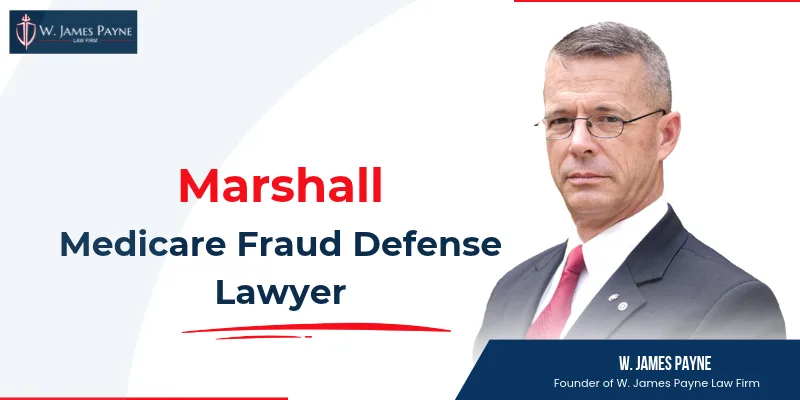
W. James Payne Law Firm focuses on criminal defense and military justice, including complex white-collar criminal matters. Founding attorney W. James Payne has practiced law since 1984 and brings extensive courtroom experience to the defense of individuals facing serious criminal allegations. He is also a retired Colonel in the United States Marine Corps Reserve, where he served for 30 years, including five years as a military judge.
This background provides a foundation in disciplined case preparation, careful evaluation of evidence, and courtroom advocacy. Payne is admitted to practice before the United States District Courts for the Eastern, Middle, and Western Districts of North Carolina, as well as the United States Court of Appeals for the Fourth Circuit.
The firm also maintains an office on Joe Tweed Road in Marshall, providing a local point of contact for people seeking legal representation in the area. Its approach emphasizes thorough case management, professional communication, and a determined effort to pursue appropriate defenses.
For someone facing a Medicare fraud investigation, these qualities matter. Allegations may involve extensive financial records, complicated reimbursement rules, and evidence gathered by multiple government agencies. W. James Payne Law Firm can evaluate the criminal defense issues involved and help you understand the options available in your circumstances.
What Can Lead to Medicare Fraud Charges?
It is estimated that around $60 billion is lost annually due to Medicare fraud. Medicare fraud allegations can arise when investigators believe someone intentionally used deception to obtain payments from a federal healthcare program. A suspicious billing pattern, disputed documentation, or questionable business arrangement may trigger scrutiny, but an investigation does not automatically establish criminal wrongdoing.
Depending on the circumstances, allegations may involve:
- False billing submissions: Investigators may claim that a provider billed Medicare for appointments, procedures, equipment, or other services that were never provided.
- Upcoding allegations: A healthcare professional or billing company may be accused of using codes that represent more expensive services than those actually performed.
- Medically unnecessary treatment: Prosecutors may allege that services or equipment were billed despite lacking the medical justification required for reimbursement.
- Kickbacks and referral arrangements: Payments, gifts, or other benefits connected to patient referrals may raise concerns under federal healthcare fraud laws.
- Misrepresentation of patient information: Allegations may involve inaccurate records, patient identities, diagnoses, or eligibility information.
- Improper use of medical equipment claims: Suppliers may face scrutiny over equipment orders, delivery records, or reimbursement requests.
Each allegation requires an independent examination of the available evidence. Billing mistakes, unclear administrative procedures, and disagreements over coding do not necessarily prove that a person knowingly committed fraud.
Understanding Federal Medicare Fraud Laws
Several federal statutes govern healthcare reimbursement and related business practices. The specific law involved can influence the government’s burden of proof, available defenses, and potential consequences.
Important Medicare fraud laws include:
- The False Claims Act: This law addresses knowingly submitting, or causing the submission of, false claims for government payment. Civil liability can arise separately from criminal prosecution.
- The Anti-Kickback Statute: This law prohibits knowingly and willfully offering, paying, soliciting, or receiving prohibited remuneration to induce or reward certain referrals or business involving federal healthcare programs.
- The Stark Law: This statute restricts certain physician referrals for designated health services when financial relationships with the receiving entities exist, subject to applicable exceptions.
- Criminal healthcare fraud statutes: Federal prosecutors may pursue criminal charges when they allege a deliberate scheme to defraud a healthcare benefit program.
- Civil monetary penalty and exclusion authorities: Separate administrative proceedings may result in financial penalties or restrictions on participation in federal healthcare programs.
FAQs
How Do Federal Authorities Typically Discover Potential Medicare Fraud?
Federal authorities may identify suspected irregularities through statistical analysis, patient complaints, employee reports, insurance data, or referrals from other agencies. Unusual billing patterns can prompt closer examination, but they do not independently establish criminal intent. Investigators may compare claims with medical records, provider histories, and payment information before deciding whether further action is warranted.
Can a Medicare Fraud Investigation Begin Without a Criminal Complaint?
Yes, authorities can initiate an investigation without a formal criminal complaint from an individual. Information from audits, administrative reviews, government databases, or confidential sources may trigger scrutiny. Investigators might examine transactions before notifying the provider involved. If you suspect your practice is being reviewed, legal advice can help you understand your obligations and prepare an appropriate response.
What Is the Difference Between a Medicare Audit and a Criminal Investigation?
A Medicare audit generally examines whether claims comply with billing, documentation, and reimbursement requirements. A criminal investigation focuses on whether evidence supports suspected unlawful conduct, potentially including intentional deception. An audit can uncover issues that lead to further scrutiny, but the processes serve different purposes. Understanding which procedure applies can help determine the appropriate response.
What Should I Do If a Former Employee Accuses My Practice of Medicare Fraud?
Take the allegation seriously without assuming it is accurate or retaliating against the individual. Preserve potentially relevant records, document business concerns, and avoid contacting witnesses to influence their accounts. An attorney can help evaluate the accusation, assess reporting obligations, and determine an appropriate response. Promptly addressing the matter may also help identify internal compliance weaknesses requiring correction.
Hire a Medicare Fraud Defense Lawyer Today
Facing Medicare fraud allegations in Marshall, NC? Protect your reputation, career, and future with experienced legal guidance. Hire a Medicare fraud defense lawyer at W. James Payne Law Firm to discuss your case and explore your defense options today.
Marshall, NC Medicare Fraud Defense Resources:
Request A Consultation
Fields Marked With An “ * ” Are Required
"*" indicates required fields


4434 Main Street
Shallotte, NC 28470
(910) 754-9411
1213 Culbreth Drive
Wilmington, NC 28405
(910) 754-9411
476 Joe Tweed Road
Marshall, NC 28753
(910) 754-9411
© 2026, W.James Payne Law Firm • All Rights Reserved •
Digital Marketing By 
*Images are obtained under license from Canva and other third-party stock image providers, with attribution included where required.