
Raleigh Military Criminal Defense Lawyer
Military Criminal Defense Attorney in Raleigh, NC
Facing criminal charges as a member of the military can leave you feeling unsure about your future and your career. Criminal allegations against a service member can have a lasting negative effect on their military career, personal relationships, and professional image. A skilled Raleigh military criminal defense lawyer can ensure your rights are upheld and that you are well informed of the charges and possible defenses.
Hire a Raleigh Military Criminal Defense Lawyer
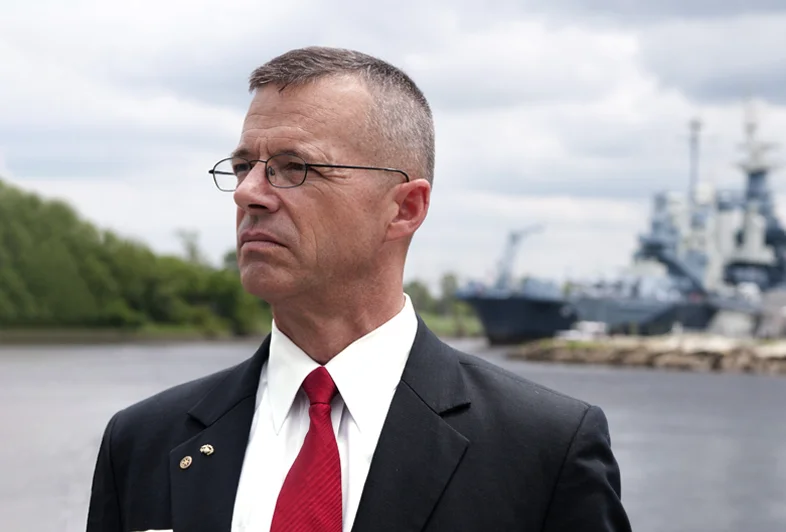
When you hire a military criminal defense lawyer from the W. James Payne Law Firm, you get an advocate with over 40 years of experience with the Uniform Code of Military Justice. As a retired Colonel in the United States Marine Corps Reserve, Attorney Payne has the experience to represent North Carolina clients in Courts-Martial or Administrative Discharge proceedings. Attorney Payne believes in honorable yet aggressive defense strategies to ensure your interests.
Prevalence of Courts-Martial Nationwide
The National Institute for Military Justice has examined the number of courts-martial across all branches of the military. For the fiscal year 2022, there were a total of 1,179 general and special courts-martial. The total number of courts-martial has decreased from 4,824 in 2000. Looking at the specific branches:
- The Air Force had 314 total courts-martial.
- The Army had 478 total courts-martial.
- The Marines had 206 total courts-martial.
- The Navy had 181 total courts-martial.
Service members from Raleigh who are facing civilian court matters would have those cases heard at the Wake County Justice Center or the North Carolina Office of Administrative Hearings. Military court matters are most often heard at Fort Bragg in Fayetteville or Camp Lejeune in Onslow County. If your situation could also lead to civilian consequences, it can be helpful to understand the difference between a felony and a misdemeanor in North Carolina.
The Uniform Code of Military Justice
Military service members are bound by the Uniform Code of Military Justice (UCMJ), which provides uniform rules of conduct across all branches of the military. When these rules are broken, a service member could face a court-martial. An experienced military criminal defense attorney can provide legal counsel in military court. The court-martial process involves five steps:
- The criminal investigation is conducted by your commander or an assigned military investigator. Your attorney can ensure your rights are not violated and provide a framework for your defense.
- The referral of charges involves a review of the evidence to decide whether probable cause exists. Your attorney can review the copy of the charges and the evidence against you.
- The Article 32 hearing is a preliminary hearing in which your case is reviewed by a third party to determine if the charges should be brought by a military court-martial.
- The referral of charges occurs when there is sufficient merit to warrant the court-martial. Your case is then referred to one of the three types of court-martial.
- The criminal trial is held before a judge and potentially a panel of jurors. You have the right to counsel during the trial, which consists of an arraignment, a motions hearing, and the presentation of evidence.
Some cases also involve specific offenses under the UCMJ, such as sexual misconduct, where guidance from resources discussing UCMJ Article 120 can help you understand the stakes while your attorney builds your defense. In situations where you believe your command has acted unfairly, a dedicated Article 138 lawyer can advise on potential complaint options.
Types of Court-Martial
When a service member is accused of an offense in Raleigh, there are different methods of handling the charges based on the severity of the offense and the rank of the service member. For less serious offenses, a non-judicial punishment can be initiated by a commanding officer. For more serious offenses, a court-martial is required. There are three types of court martials:
- Summary court-martial is a simplified process designed for minor infractions or misconduct.
- A special court-martial can be held by a military judge or by a military judge, counsel, and a four-member panel. The penalty options are limited by the type of special court-martial that is held.
- A general court-martial consists of a military judge, counsel, and six to eight court members. Penalties are determined by the Manual for Courts-Martial.
FAQs
How Much Does a Military Criminal Defense Lawyer Cost in North Carolina?
There is no exact cost for a military criminal defense lawyer in North Carolina. The cost is based on the charges, the complexity of the case, and whether the case requires going to trial. Military criminal defense attorneys may charge a flat fee for their services or charge an hourly rate. In some cases, you may be required to pay an upfront retainer fee before any work is completed on your case.
Can a Crime Committed by a Service Member be Handled by Local Law Enforcement?
Local law enforcement agencies do not handle criminal matters involving members of the military. When a service member is suspected of committing a crime, law enforcement agencies contact the appropriate military commander responsible for maintaining discipline. Following the appropriate inquiry into the matter, the commander decides how to resolve the case. If the situation also leads to civilian charges, it may be helpful to review what happens if you get a misdemeanor while in the military and how the two systems can affect each other.
What Penalties Can a Commander Recommend Against a Service Member?
When a service member violates the law, the commander responsible for maintaining discipline has the discretion to decide what penalties are appropriate. For serious criminal cases, the commander may decide that criminal charges are necessary. For less serious offenses, the commander could write a formal reprimand, make an adverse comment during performance evaluations, or recommend the service member be discharged.
What Rights do Service Members Under Investigation Have?
Service members under investigation for a criminal action have rights that must be upheld during the investigation process. Service members have the right against self-incrimination, and they have the right to be informed of the alleged offense before being questioned. Service members also have the right to be represented by counsel. Your attorney can also help you understand how criminal intent is evaluated in North Carolina, especially in cases that may cross from military to civilian court.
Can a Service Member Face a Military and Civilian Trial for the Same Offense?
A service member can face a military and civilian trial for the same offense. Double-jeopardy protections do not apply because the military trial system and the civilian trial system are considered separate sovereigns. The military may opt not to try minor offenses that have been handled in the civilian court. For serious offenses, the military may decide to pursue the case if the civilian punishment is considered inadequate.
Hire Raleigh Military Criminal Defense Lawyer
Attorney Payne uses his vast knowledge of military law and defense to represent his clients as they navigate the military court system. His experience with military courts makes him an exceptional military criminal defense attorney ready to protect your rights in negotiations and litigation. Contact the W. James Payne Law Firm now to schedule your initial consultation.
Request A Consultation
Fields Marked With An “ * ” Are Required
"*" indicates required fields

4434 Main Street
Shallotte, NC 28470
(910) 754-9411
1213 Culbreth Drive
Wilmington, NC 28405
(910) 754-9411
476 Joe Tweed Road
Marshall, NC 28753
(910) 754-9411
© 2026, W.James Payne Law Firm • All Rights Reserved •
Digital Marketing By 
*Images are obtained under license from Canva and other third-party stock image providers, with attribution included where required.